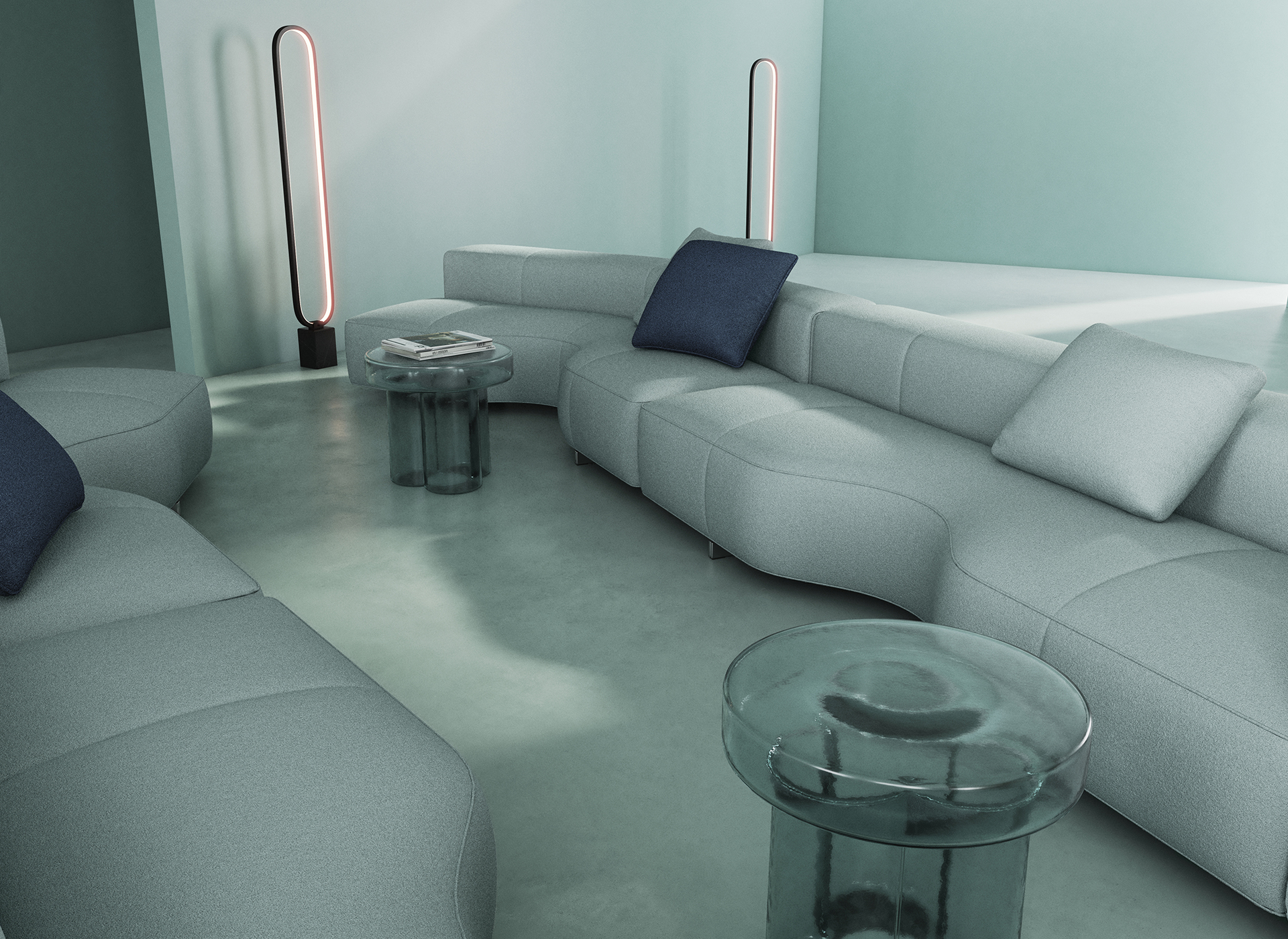
As we move into 2026, the architectural rigidity that once defined modern interiors is softening. The industry is witnessing a decisive shift toward biomorphic forms – furniture characterised by hand-stitched details, flowing wood curves, and sculptural silhouettes that mimic the natural world. But for the 3D designer and the interior visualiser, this aesthetic evolution presents a rigorous technical challenge: how do you render the fluid complexity of organic upholstery without losing the tactile integrity of the material?
The "imagination gap" – the space between a digital concept and a physical reality – is widest when geometry becomes complex. When a fabric must wrap around a multi-axial curve or show the tension of an artisanal hand-stitch, the margin for error disappears. In this new era of design, the digital twin is no longer a luxury; it is the fundamental bridge between intent and execution.
The friction of fluidity: Why organic forms demand digital rigour
For years, the industry relied on "representative" textures – generic digital files that looked ‘good enough’ in a render but lacked the structural data to behave like real fabric. As 2026 furniture trends lean heavily into biophilic shapes and exaggerated comfort, these shortcuts are failing.
When a visualiser attempts to apply a low-fidelity texture to a piece of biomorphic furniture, the displacement often breaks. The scale of the weave becomes distorted across the curves, and the light interaction feels synthetic. For the interior designer, this creates a secondary point of friction: client uncertainty. If a digital visualisation cannot accurately communicate how a high-performance bouclé or a heavy jacquard will settle into a curved seam, the path to project sign-off becomes fraught with risk. The challenge is not just aesthetic; it is a matter of technical accuracy and the preservation of craft in a data-driven workflow.
Beyond the surface: The science of texture accuracy
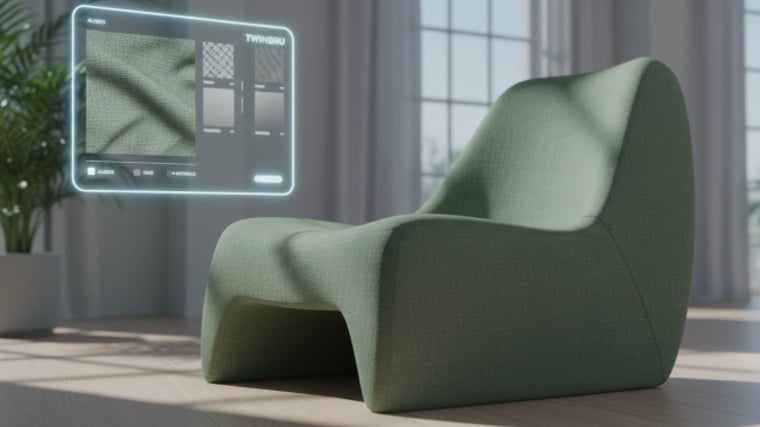
To solve the complexity of 2026’s organic trends, we must move beyond simple imagery and into the realm of Physically Based Rendering (PBR). This is where the digital-first workflow becomes a transformative tool rather than a disruptive add-on.
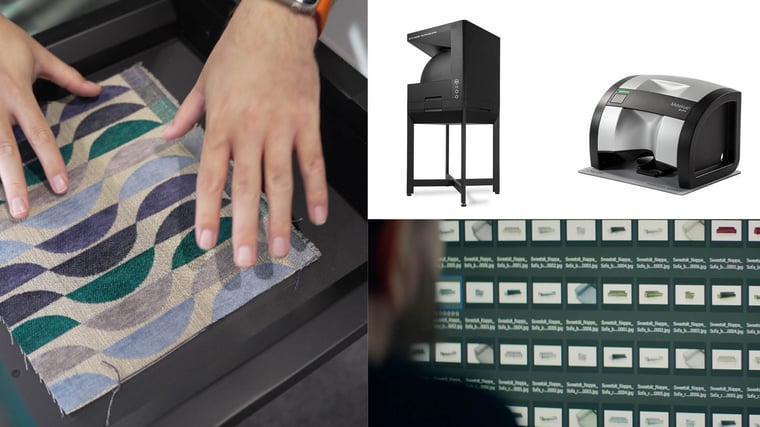
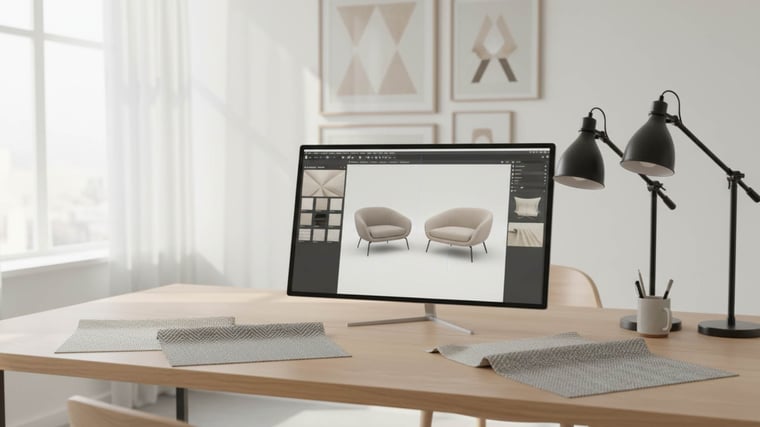
True digital fabric technology relies on high-resolution scanning – such as X-Rite technology – to capture the bidirectional reflectance distribution function (BRDF) of a material. This ensures that the digital texture reacts to light exactly as the physical textile would in a built environment. When you are working with the flowing wood curves and artisanal upholstery predicted for the coming year, these PBR maps (including diffuse, normal, roughness, and displacement) allow the fabric to grip the geometry.
By integrating FibreGuard’s digital textures into your workflow, you are not merely applying a colour; you are applying a data-set. This data accounts for the sheen of the yarn, the depth of the pile, and the way shadows settle into the weave. This level of detail allows visualisers to zoom in on hand-stitched edges or deep-seated buttons with total confidence that the digital twin is an exact representation of the physical specification.
Closing the loop: The Twinbru advantage in visualisation
The relevance of Twinbru’s 3D fabric textures lies in their dual nature: they are high-performance assets for the designer and high-performance textiles for the contractor. By using Twinbru as a behind-the-scenes technology partner, the visualiser removes the guesswork from the rendering process.
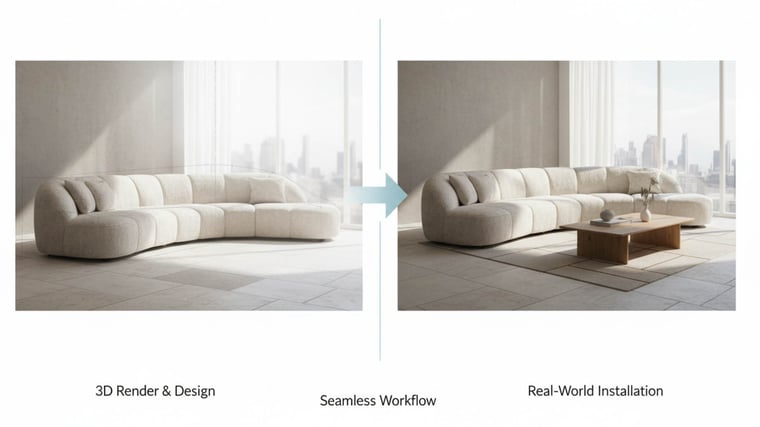
Because these digital assets are created from real-world textiles, the alignment is absolute. When a client approves a render featuring a specific digital texture, the designer can immediately source the physical FibreGuard fabric through Twinbru’s partner network. This eliminates the "substitution struggle" where a beautiful render cannot be replicated in reality due to material unavailability or inaccurate representation. It streamlines the workflow from the first polygon to the final installation.
From digital intent to physical excellence
The benefit of adopting this digital-first mindset is a newfound freedom to innovate. When you trust your materials, you can push the boundaries of furniture geometry. You can experiment with the juxtaposition of raw, organic wood and sophisticated, high-performance textiles, knowing that the final render will be a reliable blueprint for production.
Successful 3D professionals are already moving away from the "search and download" method of sourcing textures. Instead, they are building libraries based on real-world availability. This transition reduces revision cycles, builds immense trust with interior firms, and ensures that the artisanal craft of 2026 – the visible seams and the intricate weaves – is celebrated rather than obscured by technical limitations.
Taking the next step in your digital workflow
The transition to high-fidelity digital textiles is not a hurdle; it is an upgrade to your professional toolkit. As organic forms become the standard, the ability to render them with precision will be the hallmark of the industry’s leading visualisers.
To begin aligning your digital intent with physical execution, start by auditing your current texture library. Replace generic assets with verified digital twins. Explore the Twinbru platform to understand how these textures integrate into your existing software – be it 3ds Max, Rhino, or Unreal Engine. By mastering the digital