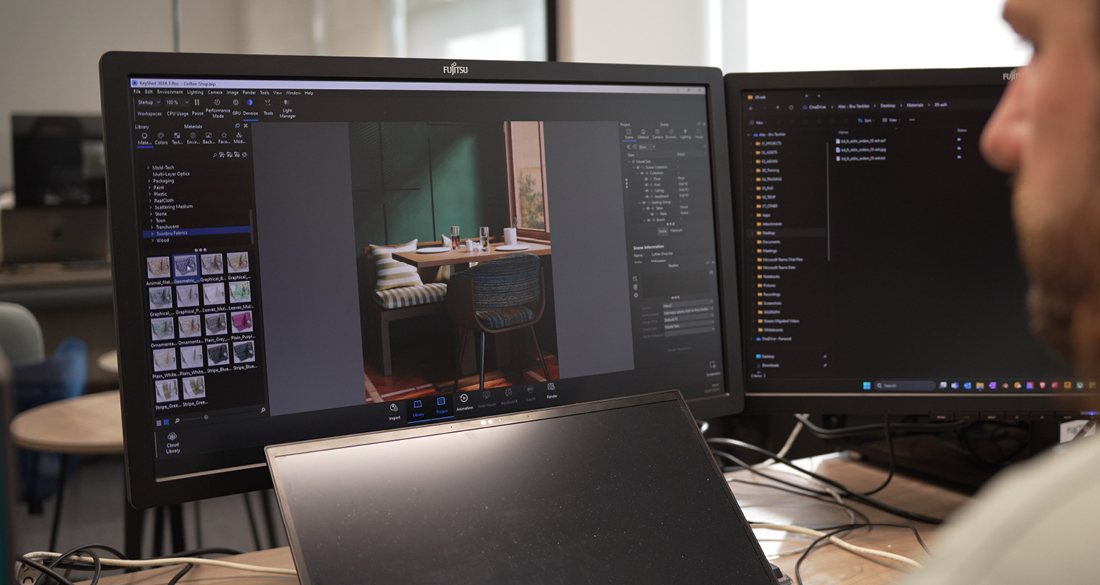
The economics of physical fabric sample libraries are brutal. Maintaining comprehensive sample collections across multiple locations costs enormous amounts. Samples fade, become discontinued or need refreshing as collections update. Shipping samples internationally for client presentations burns time and money.
Yet despite these costs, physical samples have remained essential because clients needed to touch, see and verify materials before committing to large orders. Virtual showrooms are fundamentally changing this equation.
What limits traditional physical showrooms?
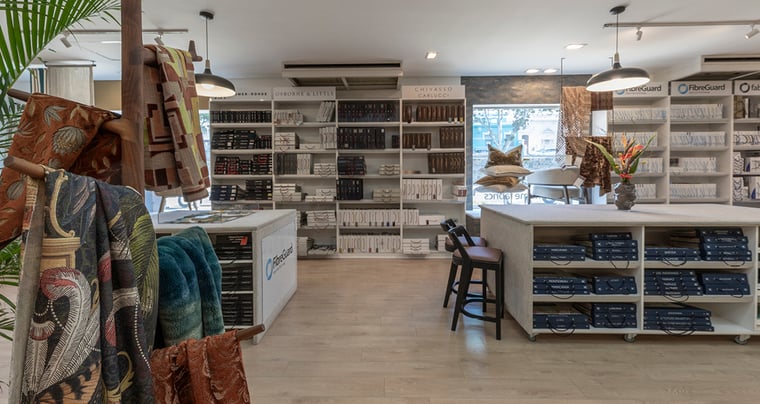
Physical showrooms and sample libraries face systematic constraints:
Geographic limitations mean clients must travel to showroom locations or wait for samples to be shipped. This adds days or weeks to decision timelines.
Limited inventory forces showrooms to stock only bestsellers rather than full collections. Clients might see 200 fabrics when the actual catalogue offers 2,000.
Time constraints restricted access to business hours. A designer working late or a client in a different time zone can't browse options when it suits their schedule.
Sample degradation means the fabric swatch a client examines might be faded or soiled, undermining confidence in colour accuracy.
Cost scaling becomes prohibitive when serving global markets. Maintaining showrooms in every major market requires enormous capital investment.
How do virtual showrooms eliminate these constraints?
Virtual showrooms eliminate these constraints whilst providing experiences that physical showrooms can't match. KB Home demonstrated this potential with their pioneering work in the Metaverse, launching model homes on Decentraland in 2023.
Virtual showrooms built on platforms like Spatial or custom WebGL environments allow clients to explore fabric collections in three-dimensional contexts that reveal how materials look under various lighting conditions, on different furniture forms and in complete interior settings.
Twinbru's VR showroom demonstrates this approach. Rather than presenting fabrics as static swatches on a webpage, the virtual environment places fabrics in realistic interior contexts.
What can virtual showrooms do that photos can't?
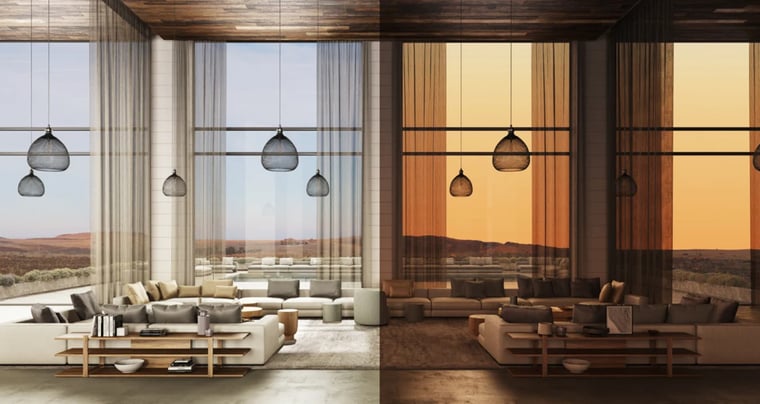
Interactive lighting control lets clients see fabrics under different lighting conditions.
Morning sunlight, evening ambient light, warm tungsten or cool LED – each reveals different aspects of fabric colour and texture. Virtual showrooms let clients control lighting to match
their installation context.
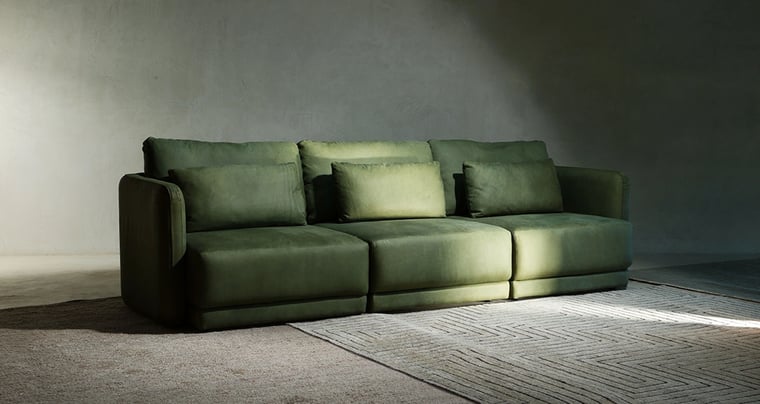
Scale and context visualisation shows fabrics on actual furniture forms rather than small swatches. Seeing how a fabric looks across a three-metre sofa provides completely different information than examining a 10cm sample.
Instant comparison allows clients to switch between fabric options instantly. Physical samples require manual swapping. Virtual environments enable instant comparisons across dozens
of options.
Unlimited inventory access means every fabric in the collection can be available simultaneously. There's no back-stock to manage.
What technical requirements make virtual showrooms effective?
Creating virtual showrooms that actually improve on physical experiences requires technical sophistication. Poor implementations create worse experiences than physical alternatives.
The foundation is accurate material scanning and digital twin creation. This is where Twinbru's
X-Rite scanning workflow becomes essential. Virtual showrooms only provide value if the digital fabrics accurately represent physical products.
Real-time rendering capability is equally critical. Virtual showrooms must respond instantly to client interactions. Modern real-time rendering engines make instant feedback possible, but materials must be optimised without sacrificing visual quality.
Cross-platform accessibility ensures clients can access virtual showrooms from various devices – VR headsets, desktop browsers or mobile devices.
How do virtual showrooms transform the business model?
Virtual showrooms don't just reduce costs – they enable business models that physical infrastructure couldn't support.
24/7 global access shows fabrics on actual furniture forms rather than small swatches.
Seeing how a fabric looks across a three-metre sofa provides completely different information
than examining a 10cm sample.
Scalable personalisation lets clients create custom room visualisations using actual products from your catalogue. This deep engagement builds purchase intent that browsing physical samples rarely achieves.
Data-driven insights reveal which fabrics clients spend time examining, which room contexts they explore and where they disengage. Physical showrooms provide none of this intelligence. 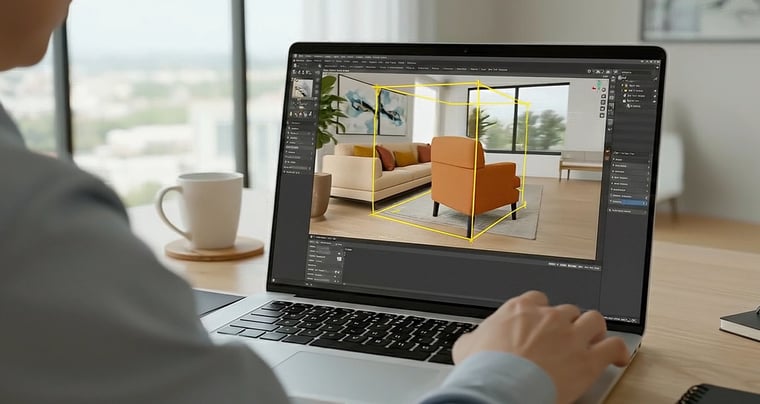
Should physical samples be eliminated completely?
Virtual showrooms aren't replacing physical samples entirely – they're reducing dependence on them. The optimal approach is hybrid: virtual showrooms handle initial exploration, with physical samples used for final verification before large orders.
This hybrid workflow dramatically reduces sample shipping costs and accelerates timelines. Instead of shipping 20 samples for initial review, you ship the three finalists after clients have done most selection work virtually.
What should studios consider when building virtual showrooms?
High-quality digital assets are non-negotiable. Poorly scanned materials undermine the entire value proposition. Partner with suppliers like Twinbru who provide scanned digital fabrics.
Intuitive user experience determines adoption. Virtual showrooms that confuse clients won't be used. Design for clients who aren't 3D software experts.
Performance optimisation ensures smooth experiences across device capabilities. Optimise for smooth performance on modest hardware.
Integration with business systems makes virtual showrooms practical sales tools. Product codes shown virtually should match inventory systems.
How does the customer journey work with virtual showrooms?
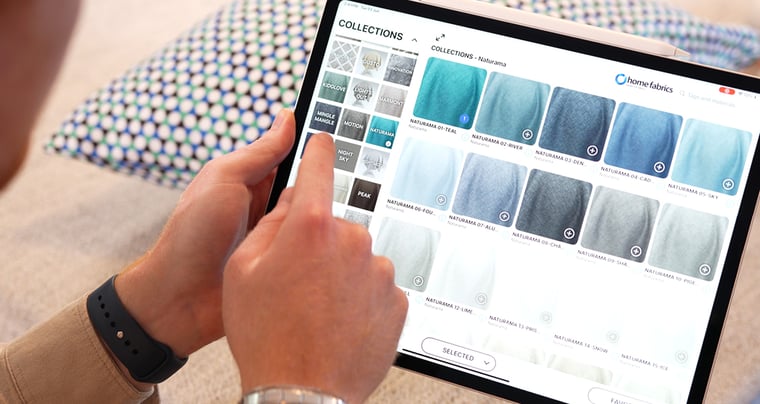
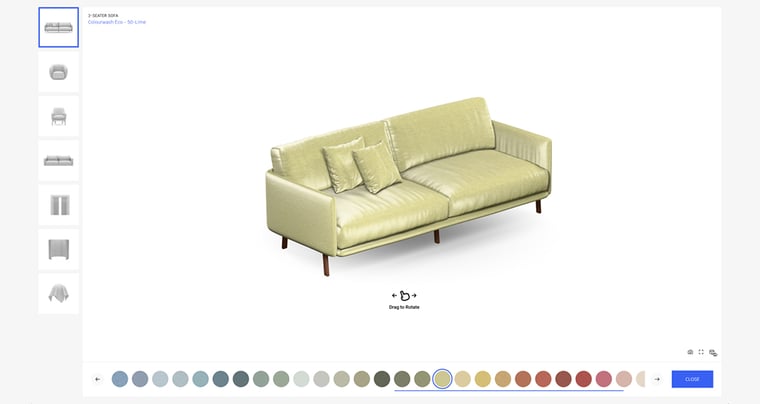
A client visits your website wanting to design a custom sofa. Rather than booking a showroom appointment, they enter your virtual showroom. They select a frame style and browse your complete fabric library – hundreds or thousands of options – seeing each fabric on their
selected frame.
They narrow to five favourites, compare them side-by-side and eliminate two more. At this point, they request physical samples of the three finalists. You ship exactly what they need with confidence that these are serious contenders, not exploratory requests.
The entire process occurs in days rather than weeks, with minimal sample shipping cost and high confidence in the outcome.
Why do virtual showrooms create a competitive advantage?
Companies offering virtual showrooms aren't just reducing costs – they're providing superior client experiences. Clients increasingly expect digital-first experiences across all industries. Furniture companies that make clients visit physical locations or wait for samples feel outdated.
The virtualisation is particularly powerful for design professionals. Interior designers want efficient browsing and comparison capabilities. They want to explore options during client meetings and move quickly from concept to specification.
What is Twinbru's VR showroom?
Our VR showroom was developed specifically to demonstrate how virtual environments can showcase digital fabrics more effectively than physical samples. It presents FibreGuard, Fabric Library and FR-One fabrics in realistic interior contexts with controllable lighting, instant fabric swapping and the ability to see materials at actual scale.
It's built on our X-Rite scanned digital twins, ensuring that what clients see virtually, accurately represents physical products. As the technology matures and adoption increases, virtual showrooms will become standard infrastructure for fabric specification.
Why is the shift to virtual showrooms irreversible?
The trend towards virtual showrooms is irreversible. As scanning technology improves and clients grow more comfortable with digital product exploration, virtual showrooms will handle an increasing percentage of the specification workflow.
Physical fabric samples won't disappear entirely. But the routine fabric selection that currently consumes enormous resources will increasingly occur in virtual environments.
The showroom of the future isn't in a specific building. It's everywhere your clients are, accessible whenever they want to browse, showcasing your complete collection without physical limitations.
Experience Twinbru's VR showroom showcasing our scanned FibreGuard digital fabric library in immersive, realistic contexts. Contact us to arrange a demonstration or explore integration opportunities at twinbru.com.
Physical fabric sample libraries are costly, limited, and slow. Virtual showrooms powered by high-quality digital twins eliminate geographic, inventory, and time constraints, letting clients explore entire fabric collections in realistic, interactive 3D environments. Twinbru’s VR showroom uses X-Rite scanned FibreGuard fabrics to provide accurate colour, texture and scale, enabling instant comparisons, controllable lighting, and faster decision-making. Hybrid workflows, virtual exploration plus selective physical samples: cut costs, accelerate timelines, and create superior client experiences, making virtual showrooms the future of furniture and interior design.